History of PRR sisters
History of PRR
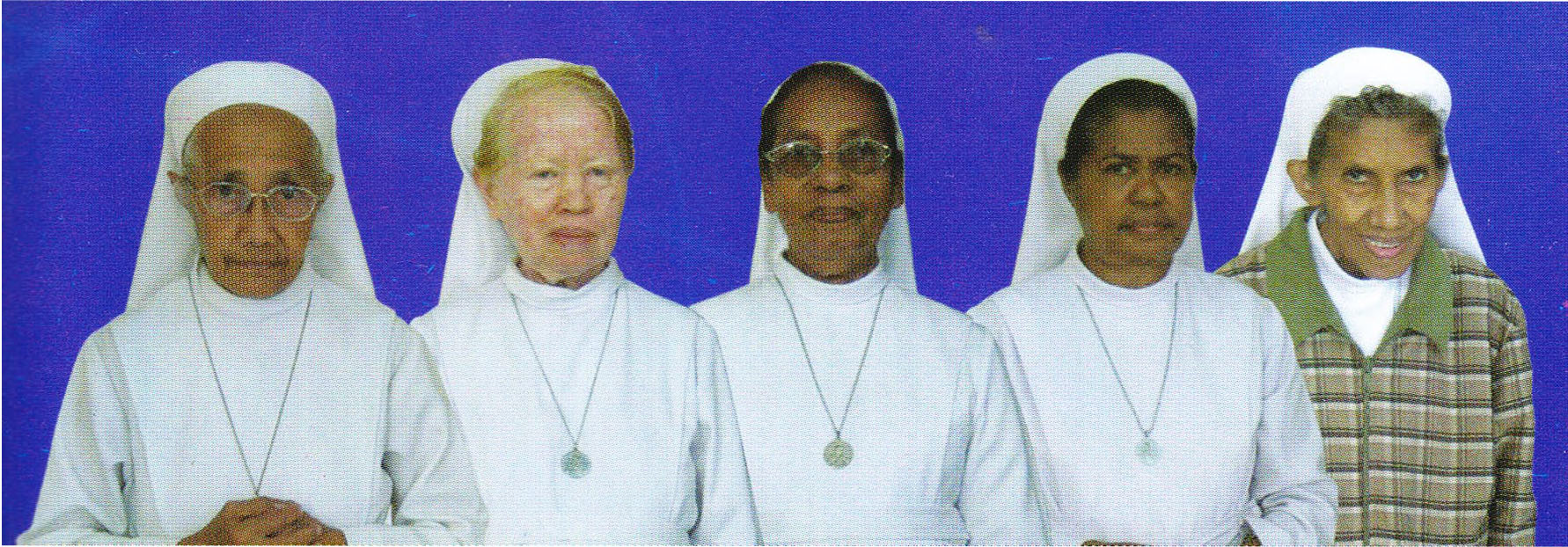
“Life consecrated through profession of the evangelical counsels is a stable form of living, in which the faithful follow Christ more closely under the action of the Holy Spirit, and are totally dedicated to God, who is supremely loved. By a new and special title they are dedicated to seek the perfection of charity in the service of God’s Kingdom, for the honor of God, the building-up of the Church and the salvation of the world. They are a splendid sign in the Church as they foretell the heavenly glory.”
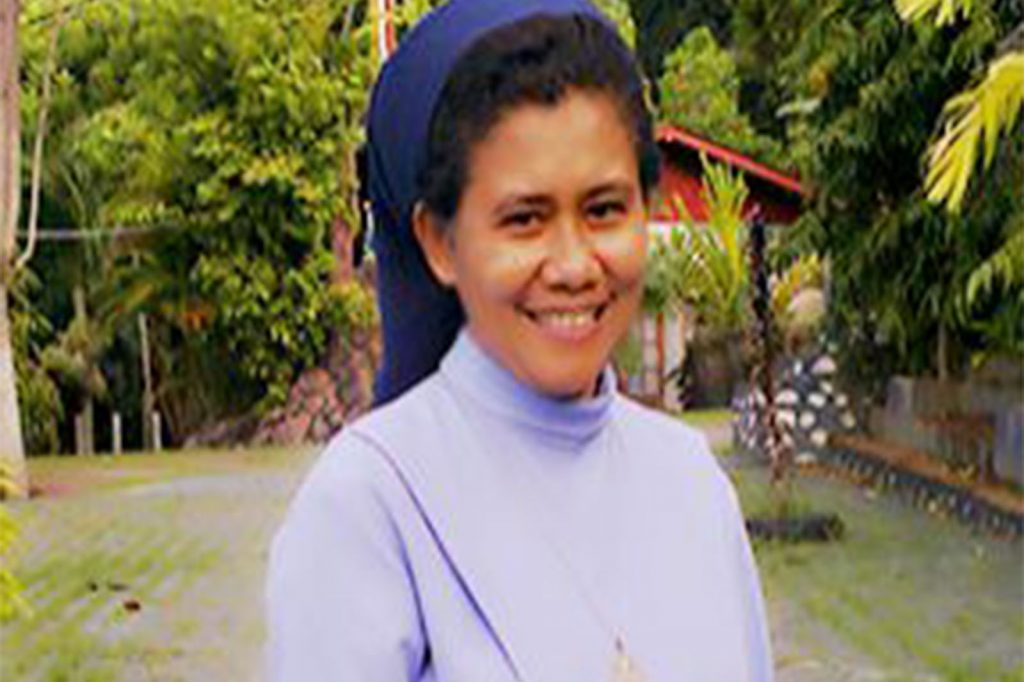
SR.M.GRATIANA
PRR General Superior of PRR Sisters
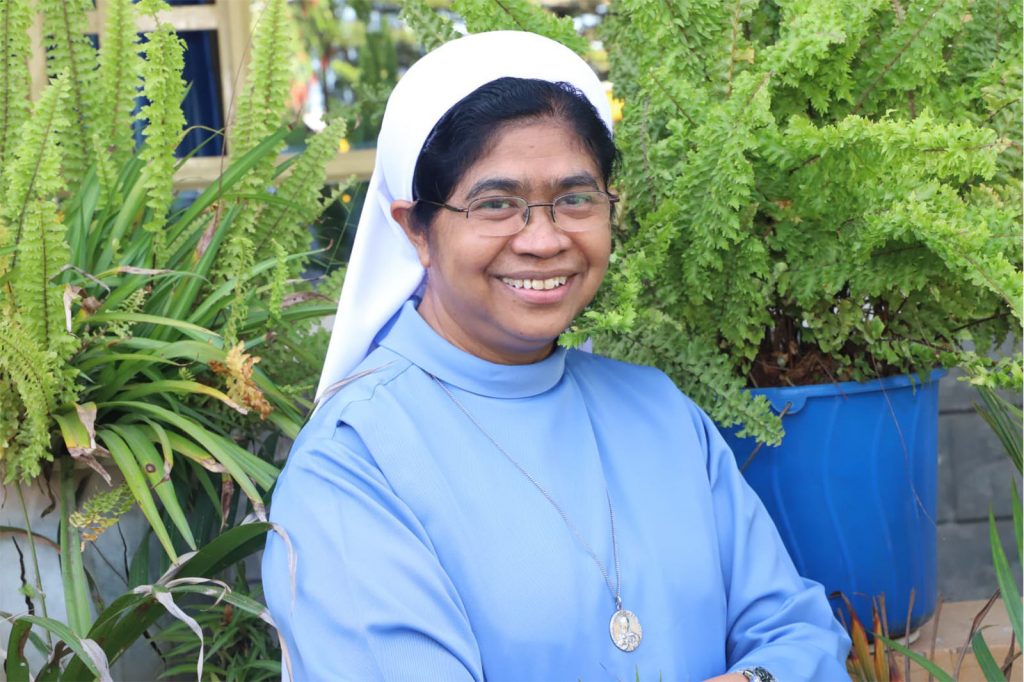
Sr.Yoseftine Toron, PRR
Regional Superior of PRR Sisters – Kenya
This is how the Canon Law of the Roman Catholic Church expresses something that is very valuable in the life of the Church, which is a life that is presented wholly to God. Throughout the history of the Church there are many awe-inspiring examples of persons who heard the call of Jesus to deny themselves, to carry their crosses and to follow Him (Matthew 18:24). The call of Jesus resonates within the Church of Flores. The proclamation of the Gospel on the islands of Flores and Timor must be carried-on, despite hindrances and limitations. In the mid-20th century, there was a sense that this duty needed to be carried-out more intensively. Therefore the Church needed more workers. The number of Catholics was increasing. Their faith needed to be deepened and sustained. Many things held back the growth of faith, such as pagan rituals and black magic practices that needed to be eliminated.
The statement of Jesus, “The harvest is plenty, but the workers are few!” (Luke 10:2), can open eyes and hearts of people, inspiring them to prepare themselves to be ready when God calls. By receiving the sacraments and praying the rosary, the people of Flores had developed traditions which were fertile grounds for the workers of the vineyard of God.
During World War II, when Gabriel Manek was stationed in eastern Flores, he felt the urgent need for workers to facilitate the deepening of the faith, and to help alleviate the suffering caused by the social-economic pressures of daily life. When he became a bishop, these factors motivated him to establish a congregation of indigenous nuns.
In 1957, when Bishop Gabriel visited Archbishop Albertus Soegijapranata, SJ, the Apostolic Vicar of Samarang in Java, they discussed the possibility of establishing a congregation of indigenous nuns. Bishop Gabriel requested Archbishop Soegijpranata to send Javanese nuns to Larantuka to guide and mentor candidates. This plan, however, never came to fruition, so it was decided to begin a new congregation from scratch.
To form the new community of nuns, Bishop Gabriel sought the assistance of the SSpS Sisters who worked in his diocese. The SSpS Superior General in Rome welcomed the idea. She appointed Sr. Anfrida, SSpS to partner Bishop Gabriel in establishing and guiding the PRR Congregation from 1st August, 1958, until 6th January, 1978. Bishop Gabriel appointed Sr. Anfrida to lead the new congregation. She did so with great love and devotion for 20 years. She is recognized as being the co-founder of the PRR.
Maria Protegente.
Bishop Gabriel was true devotee of Mother Mary. It must have been very special for him to become the bishop of a diocese centered in the town of Larantuka, which had been for centuries known as the City of the Queen of the Rosary. To emphasize his devotion, he added the words, “MARIA PROTEGENTE” (“Under the Protection of Mary”), to his episcopal crest. He saw Mary as being a powerful mother, so it was quite natural for him to name his new community in her honor. He entrusted the fate of this new congregation to the protection of Mary.
The PRR provided a place for Catholic girls to be formed into people of faith, in accordance with the Scriptures. Mary was the model for the girls. Mary was the handmaiden of the Lord who gave her life to accompany Jesus, for the salvation of humanity. The establishment of the PRR was also a sign of gratitude to God, who through the intercession of Mary, Queen of the Rosary, had placed a deep faith into the hearts of the people of Larantuka. Being based in the City of the Queen of the Rosary, it was hoped that the PRR would be true followers of Mary, that they would be women of faith who had been offered by their families, villages, and by their Church into the hands of Mary, the Queen. Also, by accepted their lives as missionary-nuns, it was hoped that they would live their lives like Mary.
They would live-out the three evangelical vows of celibacy, poverty and obedience, which they professed when they were initiated into the congregation. Using the term, “DAUGHTERS OF MARY”, carried with it a large responsibility that must be upheld by its members. They must pray the rosary, and meditate upon the mysteries of Jesus and Mary. They must proclaim those teachings through their daily lives, in their words and actions.
Humble beginnings in Lebao Tengah.
The PRR headquarters and convent are located in the parish of San Juan, beside the parish church and presbytery in Central Lebao, east of Larantuka. A scenic spot, it is about 50 meters from the Strait of Larantuka which separates the island of Adonara from Flores. As the number of Catholics increased the church had been enlarged. During World War II, the complex had been used by the police and the military. After the war, Fr. Van Velzen, SVD, had turned it into a junior high school and a dormitory.
When the school was relocated, Bishop Gabriel chose it to be the mother house of the PRR. The first group of girls who had just finished high school who were invited to join were: Maria Niu, Elisabeth Fernandez, Teresia Kewa, Vero Ruing, Theresia Knobo Ona, Theresia Ruing, Rosa da Silva, Yuliana Tokan, Wilhelmina Wain, Rosa Wain, Yuliana Tuto and Bernadet Beding. They didn’t fully understand what their invitation meant. However, they had a longing to serve God which motivated them to travel to Central Lebao.
One afternoon, when the crickets had begun chirping and the birds were returning to their nests, Sr. Anfrida gathered the girls under an old mango tree. With serenity and grace, she welcomed them, and invited them to enter into a time of solitude. The formation of the first PRR candidates had begun.
The PRR Vision and Mission.
Following is an excerpt from an interview with her, in which she recalled those days: “Bishop Gabriel Manek asked me to think about the PRR. For about 6 months I used to go to San Dominggo and brainstorm with him. I suggested that the sisters pray three rosaries each day, and he agreed to this. I also requested that each day the sisters sing the Veni Creator and the Magnificat, which he agreed to also. The Office of the Blessed Virgin was approved. I was a supporter of the Legion of Mary and I suggested that the new congregation could work with them. But Bishop Gabriel said, ‘Firstly, think about the formation of the candidates!’.”
Sister Anfrida, who was called, “Suster Ibu” (“Sister-Mother”). Admitted that this wasn’t an easy task. However, she had a steel determination, and was faithful to the Holy Spirit. Without hesitation, she was wont to say, “Let’s just begin!” When she received her appointment from the SSpS Leadership to join Bishop Gabriel in this new project, she had been working as a teacher in a vocational school in Larantuka.
Development of faith that is not accompanied by the necessary spiritual direction, and reception of the sacraments, may deviate from authentic teaching and can become obscured. At the time of the foundation of the PRR, the Catholics of Larantuka carried-out many traditions that had been followed for centuries, such as praying the rosary, participating in novenas in October, celebrating Holy Week and especially a Good Friday ritual that had a special place in the hearts of the people.
Bishop Gabriel, Sr. Anfrida and Fr. Van der Burg, needed to understand the implications of this new venture and they needed to appreciate the needs of the new congregation into order to direct it. They believed that this was the work of God, and wasn’t based on human ambition. Those who wanted to share in this mission needed to be transformed so that they could firstly become faithful persons of God, who had given themselves completely to God. In doing so they would become instruments in the building-up of the Kingdom of Heaven.
These traditions were valuable, but there was a danger of them becoming just empty actions reflecting a shallow spirituality. Bishop Gabriel hoped that the PRR would provide useful spiritual guidance. As local people themselves, hopefully they would be able to find ways of helping the people to deepen their understanding of the traditional practices, helping them to become more closely united with Jesus. Bishop Gabriel advised those assisting him to priorities the formation of the PRR candidates. This formation was based upon the identity of the PRR as a religious congregation. He understood formation as meaning a wholistic religious education for all members of the congregation. All the members would continue to learn, and to receive spiritual guidance, so as to be able to fulfil their vocations.
These traditions were valuable, but there was a danger of them becoming just empty actions reflecting a shallow spirituality. Bishop Gabriel hoped that the PRR would provide useful spiritual guidance. As local people themselves, hopefully they would be able to find ways of helping the people to deepen their understanding of the traditional practices, helping them to become more closely united with Jesus. Bishop Gabriel advised those assisting him to priorities the formation of the PRR candidates. This formation was based upon the identity of the PRR as a religious congregation. He understood formation as meaning a wholistic religious education for all members of the congregation. All the members would continue to learn, and to receive spiritual guidance, so as to be able to fulfil their vocations.
The young women who followed this way of life needed to experience the presence of God in their lives, and to face the constantly evolving challenges of the times. They needed to nurture a way of life imbued with the love of Jesus, assisted by prayer and the sacraments. In doing so they would be empowered to carry-out God’s plan and bring souls closer to their creator. Bishop Gabriel saw the PRR as being a congregation that embodied the power of the Holy Spirit that worked in them. He wanted the nuns to understand their mission and charisma in building-up the Kingdom of God, by working for unity and peace, bringing to life a spirit of faith, hope and love, expressed in serving the community.
Mother Mary was chosen to be the protector and role model of the congregation. All the members were invited to make Mary’s commitment their own, “I am the servant of the Lord. Let it be done unto me according to your will.” (Luke 1:38), mindful of the way Mary fulfilled her task as mother of Jesus, journeying from Bethlehem to Golgotha. The rosary was to be a special way of connecting the nuns with Mary. The PRR nuns were to be religious sisters who had the primary task of deepening, embodying and testifying to the sanctity of the religious life.
The mission of the PRR was likened to Mary’s, which was to serve. All PRR sisters needed to learn how they could best be of service to the people where they lived. Bishop Gabriel was a man who looked to the future. He envisaged the challenges that the PRR would face, and therefore did what he could to support and accompany them along their spiritual journey.
The founding of the Puteri Reinha Rosari
Bishop Gabriel, and Sr. Anfrida, held many meetings to plan the founding of the PRR congregation. At these, they even talked about the design and color of the members’ habits. They decided that the habit would be a white robe with a blue belt, the traditional color of the Virgin of Lourdes. Two local women helped measure and create the new habits. P. Arnold van de Burg SVD as vicar of Diocese welcome this good idea and agree for founding this local Congregation.
On 15 th August, 1958, on the Feast of the Assumption of Mary, the PRR was officially begun at a public Mass celebrated in the church of San Juan, Lebao, by Father Van Eyck, SVD. For the first time, the first 12 candidates appeared in their new habits, and they were introduced to those present as being candidates for the newly-established Puteri Reinha Rosari congregation. It was a very special moment for them all. Bishop Gabriel told the candidates that he had high hopes for them, and that he believed, with God’s help, they would be taken care of, and would be instruments of his mission.
Formation as a nun
In the early days, Sr. Anfrida had a very busy schedule, just organizing the day-to-day living of the young sisters. There were so many limitations and needs. There were simple challenges such as finding a conch shell to grate coconut flesh, or an axe to behead a chicken! But Sr. Anfrida and Bishop Gabriel were talented practitioners who had the gift of making something out of nothing. Everything started from scratch. From the very start the new sisters realized that they were preparing to live a life of poverty. They were trained to pray, and to reflect on the mysteries of the rosary. They made daily visits to the Blessed Sacrament, made the Way of the Cross, and participated in the Eucharist. Coming from unsophisticated backgrounds, the girls were trained in etiquette and discipline, and were instructed in social skills.
In the early days, Sr. Anfrida had a very busy schedule, just organizing the day-to-day living of the young sisters. There were so many limitations and needs. There were simple challenges such as finding a conch shell to grate coconut flesh, or an axe to behead a chicken! But Sr. Anfrida and Bishop Gabriel were talented practitioners who had the gift of making something out of nothing. Everything started from scratch. From the very start the new sisters realized that they were preparing to live a life of poverty. They were trained to pray, and to reflect on the mysteries of the rosary. They made daily visits to the Blessed Sacrament, made the Way of the Cross, and participated in the Eucharist. Coming from unsophisticated backgrounds, the girls were trained in etiquette and discipline, and were instructed in social skills.
Three months after the formation program had begun, only 3 of the original 12 candidates remained. The others had gone home. The remaining three entered the aspirant program which lasted for six months, with an emphasis on intellectual training and also language proficiency.
Yosef Badilangu, a retired teacher, taught Indonesian, helping them to communicate well, and Fr. Van Eyck provided religious training and English classes. In mid-1959, Sr Helena, SSpS, came to help with embroidery and sewing. Later, Sr. Designata, SSpS came to accompany the candidates.
Three months after the formation program had begun, only 3 of the original 12 candidates remained. The others had gone home. The remaining three entered the aspirant program which lasted for six months, with an emphasis on intellectual training and also language proficiency.
Yosef Badilangu, a retired teacher, taught Indonesian, helping them to communicate well, and Fr. Van Eyck provided religious training and English classes. In mid-1959, Sr Helena, SSpS, came to help with embroidery and sewing. Later, Sr. Designata, SSpS came to accompany the candidates.
They tended to get homesick very easily and didn’t adapt well to their new environment. However, with patience and love the SSpS sisters gave their best to educate the young girls, preparing them to become faithful and joyful nuns.
In August 1959, Maria Wahon became the Indonesian teacher, while Theresia Kumanireng taught English. Paulina Fernandez was also on the teaching staff as was Reineldis Tapoona who taught the young women basic mathematics and business. At the end of that year, Fr. Van Eyck moved to Ende. He was replaced by Fr. Cor Smit, SVD, who taught religion and liturgy. Sr. Anfrida, who was musically gifted, taught singing and music, which also helped with their character building. At the time they didn’t realize that in the future the PRR sisters would become well-known for their singing and would often be invited to perform in public.
7th October, 1959
On this day, a feast day of Mary, the first three PRR novices were formally admitted into the congregation and received their special PRR habits. It was a joyous event, held in the San Juan Church, in Lebao, led by Bishop Gabriel. The church was filled with beautiful voices singing hymns such as “Hail, Star of the Sea”. The ceremony went well, and of course all eyes were on the three young women in their full habits. They wore a long white robe, their heads covered with a white veil, and they had a blue cord around their waists, with a long rosary attached to it. The MC announced the new names of the young nuns: Sr. Maria Dolorosa, Sr. Maria Advocata and Sr. Maria Desponsata.
Da Mihi Virtutem
When Bishop Gabriel left Larantuka to become the Archbishop of Ende, he said to Sr. Anfrida, “Starting this congregation with the power of God, it will continue to live. However, if we rely on human strength, it will falter!” Bishop Gabriel was destined to lead the new congregation for just three years. During this time, he was very much aware of the truth of his own statement. He knew he was just an instrument in the hands of God, and that God alone would sustain this mission, using human hands for His glory and the salvation of humanity. The words of Jesus, “Every person who wants to follow me must deny themselves, take up their cross and follow me” (Luke 9:23), ring true especially for those who answer Jesus’ call. Maybe it would be comfortable if Jesus could be followed without challenges, but that’s not the way it is. Obstacles are always present to be overcome. Through crises people become mature. Crises can be dangerous, but they present challenges that need to be faced and overcome if one is to achieve one’s destiny in the Lord.
Bishop Gabriel knew what he was saying when he said the words quoted above. He wanted the new congregation to be prepared to face an uncertain future. When he left the Diocese of Larantuka, he also left the PRR, leaving the new congregation in the hands of his successor. It was suggested that the PRR be disbanded and the members be transferred into another order. But that idea was rejected. Life in the convent was affected by modernization of the community at large. In the late 20th century, on the 40th anniversary of the founding of the PRR, the congregation had spread far and wide, opening new missions in the spirit of service, following the model of Mary. The priority of the sisters was not just to attract new members, but to follow Jesus faithfully.
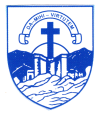
The motto of the PRR was, “DA MIHI VIRTUTEM!” (“Give me strength!”). Their symbol was a cross, a rosary, and a fortress being pounded by waves. It reminded them of their need to depend on the power of God: “DA MIHI VIRTUTEM!” If we were to compare a photo of the sisters at the time of the founding of the PRR with a current one, we would see great changes. The only distinguishing thing worn by the sisters now is a medal featuring Jesus and Mary. Their garb is simpler, similar to the habits worn by other sisters. However, this isn’t important. The important thing is for the nuns to be faithful to the fundamentals instilled in them by their founder. That’s where the true identity of the congregation lies.
Bishop Gabriel never returned to Larantuka, after he moved to the USA. His spiritual bond with the PRR remained. He was in contact by mail with the leadership of the PRR. He always enjoyed being visited by people from Flores, and he loved hearing updates about the PRR. He prayed for them constantly, praying for them and himself, “DA MIHI VIRTUTEM!”
We'd Love to Hear From You
His mission is Our mission…Is it Yours? Let’s find out together!